

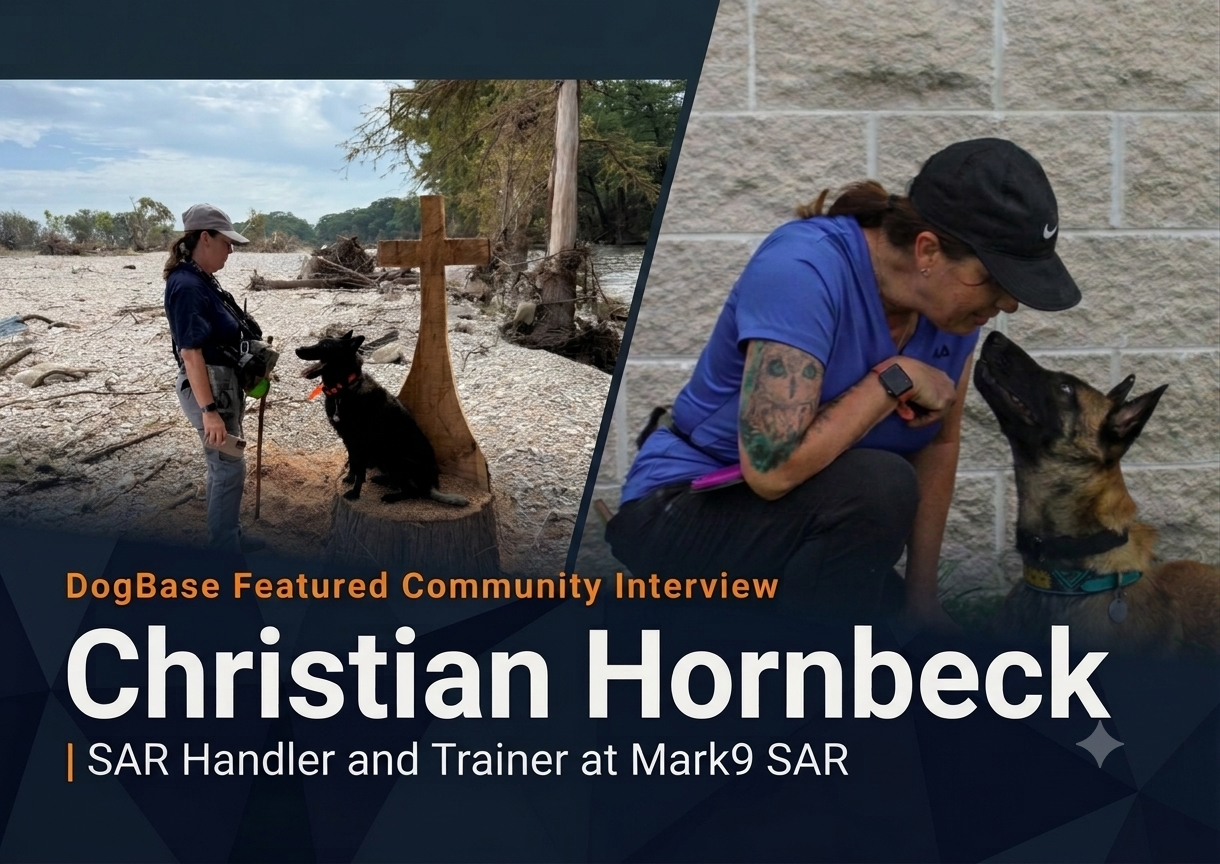



.webp)
.webp)


Q: Tell us a bit about yourself.
I have been in SAR since 2009. I am working with my 4th HRD dog. I have worked a Doberman and 3 Malinois. I hate doing my logs, but your program makes it easy to do so I don't generally get it done sooner than later now.
Q: How did you start working with K9s?
I started on CARDA and a local team in Riverside, CA.
Q: What are some unique aspects of your K9 partner?
She's extremely loyal.
Q: Can you share some challenges and triumphs?
Some challenges are dealing with long hours and long searches away from family. Triumphs are when a loved one is found. I am also very humbled by what my dog teaches me on the daily, especially about patience and trust.
Q: Describe the bond you share with your K9.
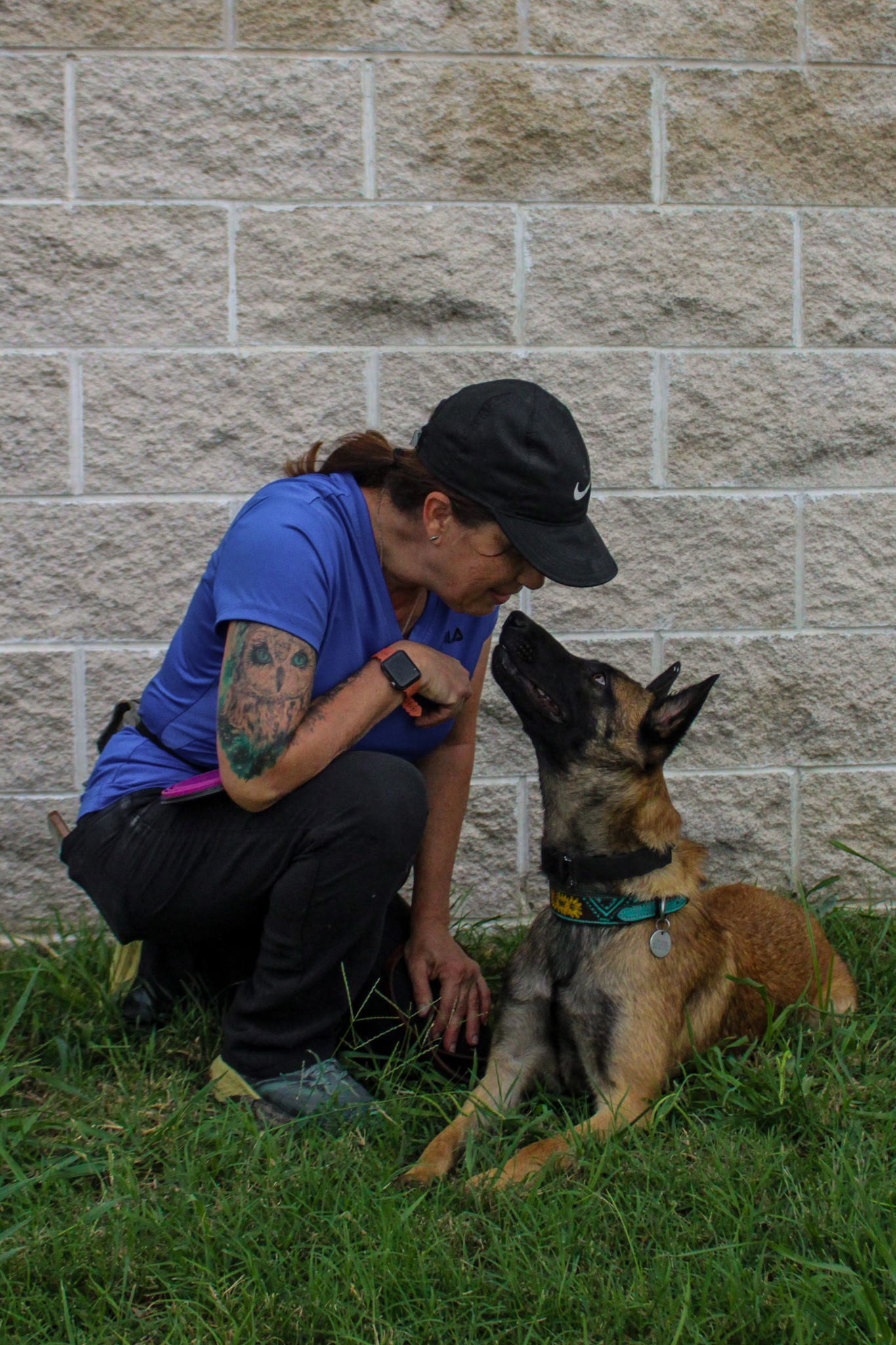
The bond is like no other. My K9 goes everywhere with me. She's there when I am feeling great and when I am not. Her mood is reflected in my attitude. She makes me aware of so many things I never thought possible from a dog.
Q: What does daily life and training look like for you and your K9?
She goes to work with me every day. I rarely leave home without her. Some days don't involve SAR training per se, but training of some kind happens daily. Some days I'm strict and call the shots, and some days my dog calls the shots.
Q: Tell us a little about the K9 unit you're a part of.Christian:
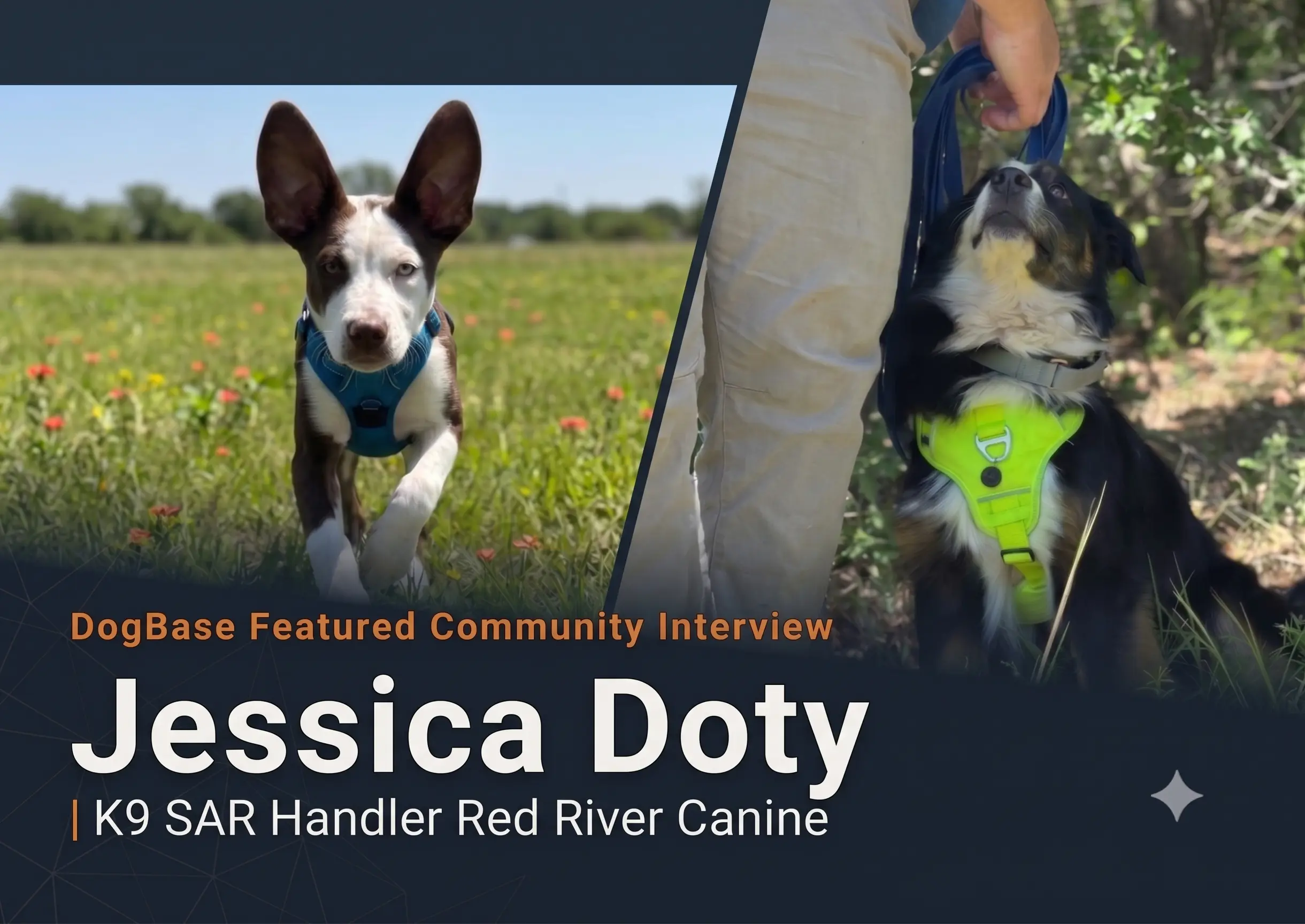
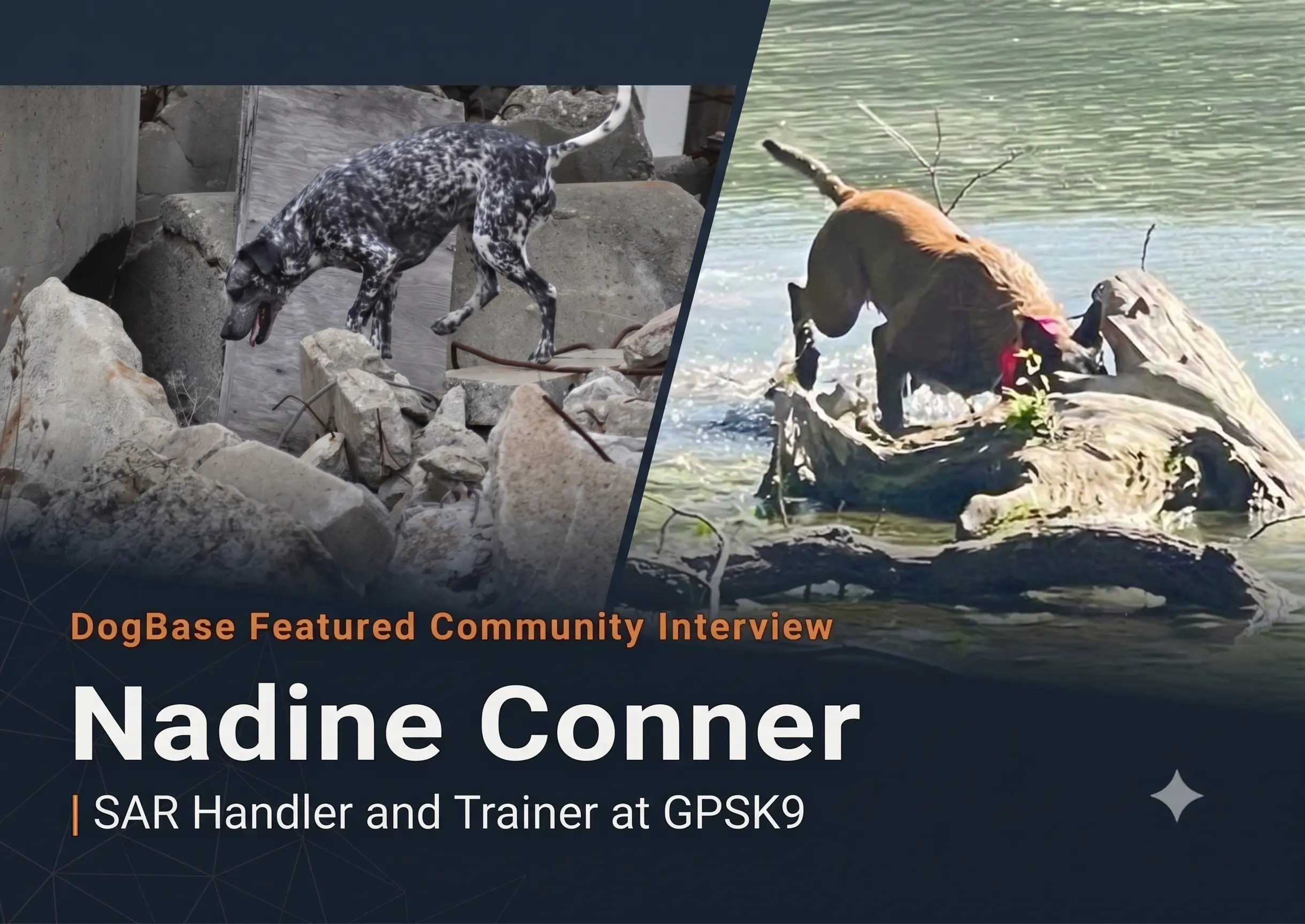
Mark9 has been around for over 20 years. We are a small team in the Dallas, TX area. We have live find, trailing, and human remains detection dogs. Some of our members are flankers with no dogs. We are very close — I consider them family.
Q: Describe a recent mission or case where your K9 unit made a significant difference.
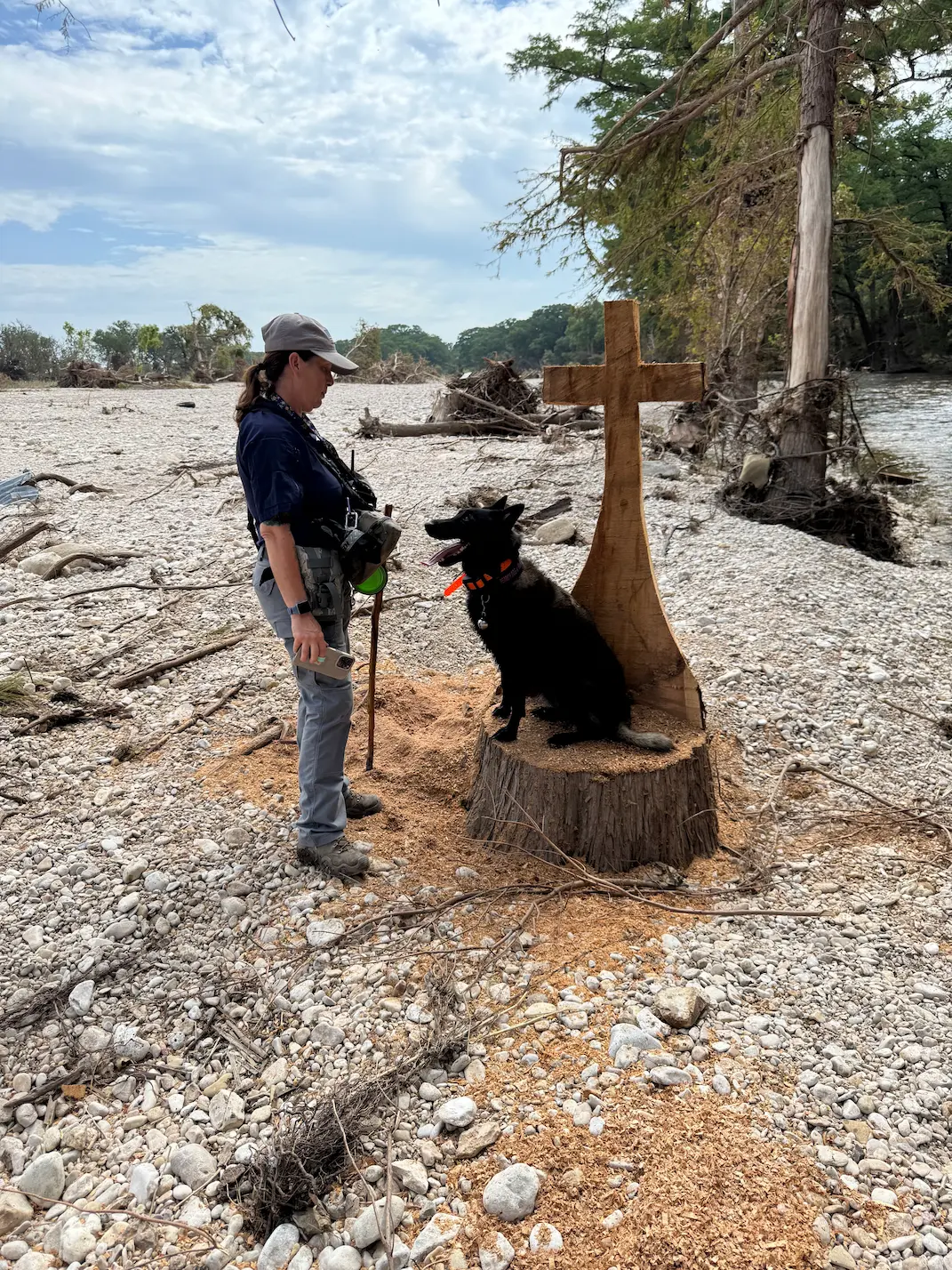
I was in Kerrville after the floods. We helped by working for days trying to help locate the missing people from the floods. My girl was able to make a recovery of an elderly woman, and that is one search I will never, ever forget.
Q: What are some of the biggest challenges faced by K9 units in your field?
There's so many, I feel, but here in Texas the heat is a big challenge we have to deal with, and snakes.
Q: What advice would you give to aspiring K9 handlers?
Take time to research and visit local teams before picking the one for you. I would recommend becoming a flanker first, then starting a dog. It's a big, big commitment that costs a lot of money and time away from family, so I also recommend people not do it when they have young children.
Q: How can the public support K9 units and their important work?
Our community can support search and recovery teams by understanding the vital role they play and standing behind them in their mission. Volunteers, donations, training opportunities, and public awareness all help ensure teams have the resources needed to respond when called.
Q: How has DogBase impacted your work with your K9/unit?
It's made doing my logs easy and convenient.
Q: What are your favorite features of DogBase?
The weather part of it. It's easy to use. The location part is great also.