




.webp)
.webp)

.webp)


Key Takeaways
- A 2008 University of Florida study found trained detection dogs 97.5 percent accurate at distinguishing live bed bugs from other household insects under controlled testing, with no false positives.
- The same study found dogs 95 percent accurate at telling live bed bugs and viable eggs apart from cast skins and debris, with a 3 percent false positive rate.
- A 2003 study published in the Journal of Economic Entomology found trained termite detection dogs 95.93 percent accurate at locating groups of 40 or more Eastern subterranean termites, with a 2.69 percent false positive rate.
- NESDCA (National Entomology Scent Detection Canine Association) and the World Detector Dog Organization (WDDO) certify pest detection teams through annual, double-blind testing, and a certificate only covers the specific target odor the team was tested on.
- Controlled lab accuracy and real-world field accuracy are not the same number. A Rutgers University field study found handlers consistently believed their dogs detected infestations at 95 percent or better, even when field performance varied significantly by team, which is why logging every search matters as much as certifying it once a year.
Bed bug and termite detection dogs work on the same scent detection principles as an explosives or narcotics dog: a trained alert, tied to a specific target odor, verified against a known answer. The difference is the target. Instead of contraband, these dogs are trained to find live bed bugs, viable eggs, or active termite colonies hidden inside walls, mattresses, and framing where a visual inspection misses them. It's a real, established branch of working dog deployment, with its own certifying bodies, its own published accuracy research, and its own documentation problem.
What Is a Pest Detection Dog?
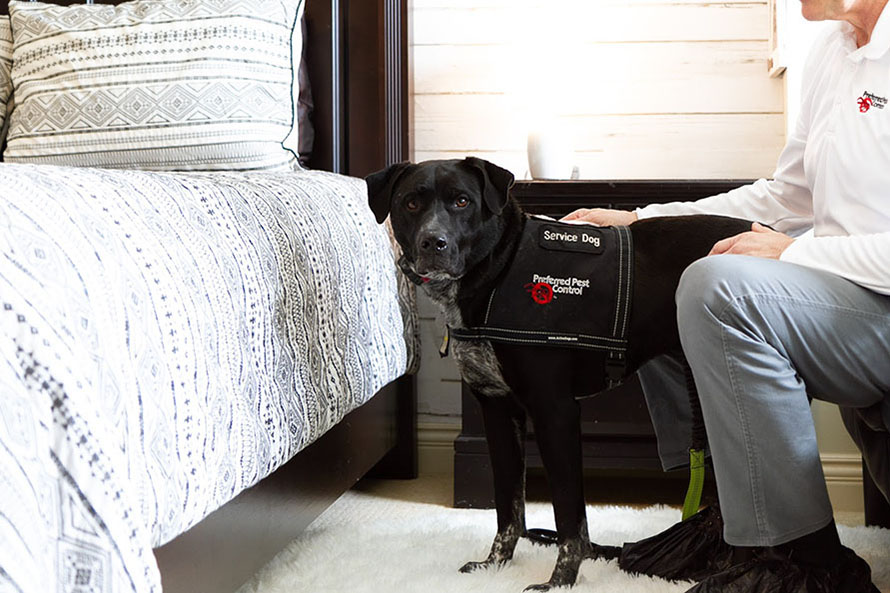
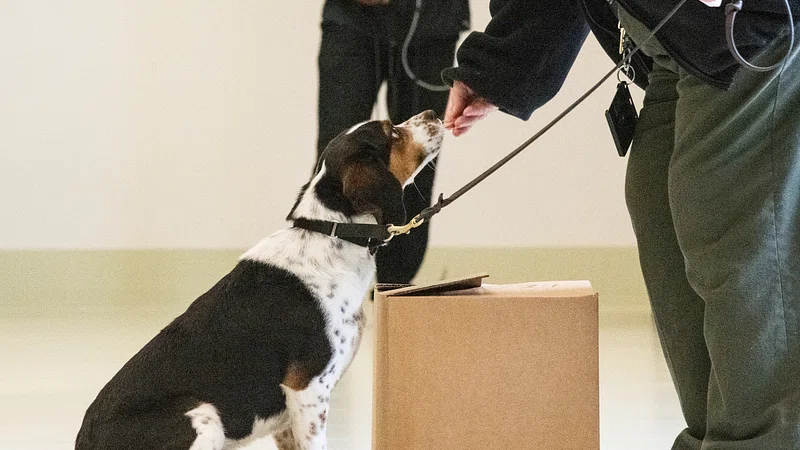
A pest detection dog is a scent-trained canine that gives a trained alert on a specific target odor, such as live bed bugs or an active subterranean termite colony, using the same reward-based conditioning used to train narcotics, explosives, and accelerant detection dogs. The dog isn't looking for visible insects. It's trained to recognize the volatile compounds a live infestation gives off, which lets it search a hotel room, a rental unit, or a wall cavity in a fraction of the time a purely visual inspection takes.
Two specialties dominate the field. Bed bug dogs are trained to alert on live bed bugs and viable eggs, and to ignore cast skins, feces, and dead bugs, since those don't indicate an active infestation. Termite dogs are trained to alert on live colony activity, and to discriminate that from old termite damage, dry wood, and other structural pests. Some handlers cross-train a dog on both, but the certifying bodies treat them as separate specialties, tested and certified independently.
How Detection Dogs Are Trained for Bed Bugs and Termites
Training follows the same core method used across working dog disciplines: imprint the target odor, pair it with a reward, then build discrimination against everything the dog might encounter in a real search that isn't the target.
Bed bug dog training starts with live bed bug odor, not dead bugs or shed skins, since the whole point of the dog is confirming an active infestation rather than historical evidence of one. Handlers use a food or toy reward system to build the alert, then spend weeks proofing the dog against distractor odors it will hit in the field: cockroaches, ants, carpet beetles, and other insects that share a structure with bed bugs. A dog that alerts on a dead bug or an empty cast skin isn't giving useful information to the client, so distinguishing "was here" from "is here" is a specific, trained skill, not a side effect of general scent training.
Termite dog training follows a similar arc but with a different target: live termite activity as opposed to old damage or bare wood. Researchers Brooks, Oi, and Koehler documented this training method in a study published in the Journal of Economic Entomology in 2003. Dogs trained to detect Eastern subterranean termites in that study were tested against multiple other termite species and against non-termite material like termite-damaged wood, cockroaches, and carpenter ants, to confirm the alert tracked live termite presence specifically and not just "wood-related smell in general."
How Accurate Are Pest Detection Dogs?
Accuracy depends heavily on whether you're looking at controlled lab testing or field conditions, and the two numbers are not interchangeable. In the 2008 University of Florida study, researchers trained seven dogs for 90 days on live bed bug and viable egg odor, then tested them under controlled conditions. The dogs were 97.5 percent accurate distinguishing bed bugs from other common household insects, with zero false positives. They were 95 percent accurate telling live bugs and viable eggs apart from cast skins and debris, with a 3 percent false positive rate, and 98 percent accurate locating bed bugs planted in hotel rooms, again with no false positives.
The 2003 termite study found comparable numbers for a different target odor. Dogs trained on Eastern subterranean termites were 95.93 percent accurate finding groups of 40 or more live termites, with a 2.69 percent false positive rate on empty test containers. The same dogs generalized well to related species: 100 percent accurate on dark southern subterranean termites, 98.89 percent on Formosan subterranean termites, and 97.33 percent on powderpost termites, without additional target-odor training.
Field performance tells a different story, and it's worth handlers being honest about that gap rather than quoting lab numbers as if they apply to every job. Rutgers University entomologists Cooper, Wang, and Singh evaluated canine bed bug detection teams working in naturally infested apartments rather than a controlled lab setup. Every handler in that study believed their dog detected infestations at 95 percent accuracy or better. Actual field performance varied significantly from team to team once it was measured against a known infestation, not just against handler confidence. That gap between believed accuracy and measured accuracy is the strongest argument for tracking real search outcomes over time instead of relying on an annual certification score as a stand-in for daily performance.
Certification Standards for Pest Detection Dogs
Two organizations set the proficiency bar for pest detection teams in the United States: NESDCA (National Entomology Scent Detection Canine Association) and WDDO (World Detector Dog Organization). Both run double-blind certification tests, meaning no one present during testing, including the evaluators, knows where the target odor is hidden until the test concludes. That structure exists specifically to rule out a handler unconsciously cueing the dog toward the correct hide.
A few rules carry real operational weight for handlers. NESDCA certification is valid for one year from the date of issue, and teams must retest annually to keep working under that credential. A certificate names the exact target odor the team was tested on, and NESDCA's own certification rules state that a certified team cannot represent, in any form, that they can find a scent that isn't listed on their certificate. A dog certified on live bed bugs isn't automatically qualified to claim termite detection capability, and the certifying bodies treat dual certification as a separate credential a team has to earn on its own, not an assumed extension of an existing one.
Why Handlers Log Detection Accuracy Between Certifications
Annual certification tells you a team could perform at standard on one specific day, under test conditions. It doesn't tell you how that team performed on the sixty jobs between this year's test and last year's. That gap is exactly where documentation earns its keep, and it's the same argument that holds across every working dog discipline DogBase supports: the technology problem is real, but underneath it is a documentation culture problem. A team that only has a record of "certified" and "recertified" has no way to catch a slow decline in indication reliability before it shows up as a missed infestation or a client dispute.
Logging every search gives a handler or a pest control company something a once-a-year test can't: a trend line. If a dog's confirmed find rate on live bed bugs starts drifting down, or false alerts start clustering around a specific structure type or season, that pattern only shows up if someone logged enough individual searches to see it. The same principle DogBase applies to Training & Activity Logging and Performance Analytics & Insights for SAR, detection, and law enforcement K9 teams applies just as directly here: a single alert means little on its own, but a documented pattern across dozens of searches tells you whether a team is holding its certified standard or sliding away from it.
For companies that answer to clients, property managers, or regulators, that record also matters for Reports, Compliance & Exports. A dog and handler team that can produce a documented history of search outcomes, not just a certification date, has a stronger answer when a client questions a result or a competitor questions their credibility.
What to Track for Every Pest Detection Search
A useful search log doesn't need to be complicated, but it does need to be consistent. At minimum, a pest detection record should capture:
- Date and location of the search, including structure type (residential, hotel, commercial).
- Target odor searched (live bed bugs, viable eggs, live termite activity, or another certified specialty).
- Alert given or no alert given, recorded separately from whether the alert was later confirmed.
- Confirmed find, false alert, or unconfirmed, once a visual inspection or treatment follow-up settles the question.
- Environmental conditions that could affect scent behavior: temperature, humidity, HVAC activity, clutter level.
- Handler and dog identifiers, for teams running more than one detection dog.
None of this replaces certification. It's the record that shows whether certified performance is holding up between tests, and it's the difference between a company that can say "our dogs are certified" and one that can say "here's our confirmed find rate over the last 200 searches."
Where Pest Detection Fits in the Broader Detection Dog World
Pest detection sits in the same category as narcotics, explosives, accelerant, and conservation detection work: a dog trained on a specific target odor, tested against a known standard, and deployed to find something a human inspector would likely miss or take far longer to locate. Law enforcement and government detection programs typically test against standards like SWGDOG's guidelines. The pest control industry built its own equivalent through NESDCA and WDDO, because the underlying problem, proving a dog's alert actually means something, is identical across every one of these specialties. A pest control company evaluating a detection dog vendor is really asking the same question a K9 unit commander asks about a narcotics dog: how do we know this alert is reliable, and how do we know it's still reliable next month.
That question doesn't get answered once a year. It gets answered by the record a team builds one search at a time.
FAQ Section
How accurate are bed bug detection dogs?Under controlled testing in a 2008 University of Florida study, trained bed bug dogs were 97.5 percent accurate distinguishing live bed bugs from other household insects, with no false positives. Accuracy in real-world field conditions varies more, since a separate Rutgers University field study found actual team performance in naturally infested apartments didn't always match the 95 percent or higher accuracy handlers believed their dogs were achieving.
How are termite detection dogs trained differently from bed bug dogs?Termite dogs are trained to alert on live colony activity and to discriminate that from old termite damage, dry wood, and other structural pests, while bed bug dogs are trained to alert on live bugs and viable eggs while ignoring cast skins and dead bugs. Both use the same reward-based imprint and discrimination training method, just built around a different target odor and different distractor scents.
Do pest detection dogs need to be certified?There's no federal mandate requiring it, but NESDCA and WDDO certification is the industry standard for proving a team's reliability. Both organizations require annual retesting through double-blind evaluations, and a certificate only covers the specific target odor a team tested on, not detection capability in general.
Can one dog be certified for both bed bugs and termites?Some dogs are trained on both, but the certifying bodies test and certify each target odor separately. A team certified on live bed bugs isn't automatically qualified to represent termite detection capability, and NESDCA's own certification rules state a certified team can't claim to find a scent that isn't on their certificate.
Why do lab accuracy numbers and real-world accuracy numbers differ for detection dogs?Controlled studies test dogs against a known number of hides in a structured environment, which tends to produce very high accuracy numbers. Field conditions introduce variables a lab test doesn't, including clutter, temperature, prior chemical treatments, and structure layout, and a Rutgers University field study found team-to-team performance varied significantly once measured against confirmed infestations rather than handler confidence.
How should pest control companies log detection dog performance?At minimum, log the date, location, target odor, whether an alert was given, whether that alert was later confirmed, and relevant environmental conditions, for every search. Tracked over time, this shows whether a team's confirmed find rate is holding steady, which certification alone, tested once a year, can't demonstrate on its own.