




.webp)
.webp)

.webp)


Real SAR deployments do not look like the single dramatic find that shows up in news footage. They look like fourteen to sixteen hour days, decontamination cycles built into the schedule, and dogs trained to override a handler's cue when the ground will not hold. Two fully documented deployments, Hurricane Helene in 2024 and the Texas Hill Country floods in 2025, show what readiness actually requires once a team is on the ground.
Both events were covered by outside reporting with named handlers, named dogs, and on-record quotes. That makes them useful in a way that composite examples are not. You can see the actual operational record, not a summary of it.
Hurricane Helene, Western North Carolina, 2024
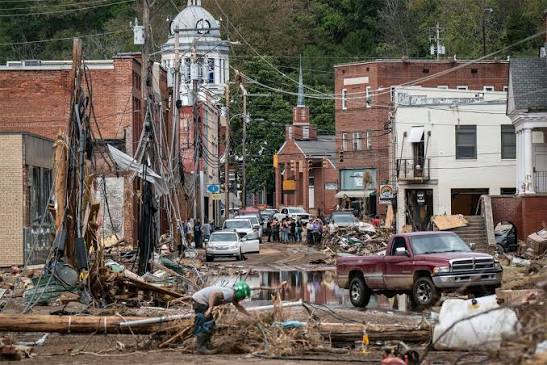
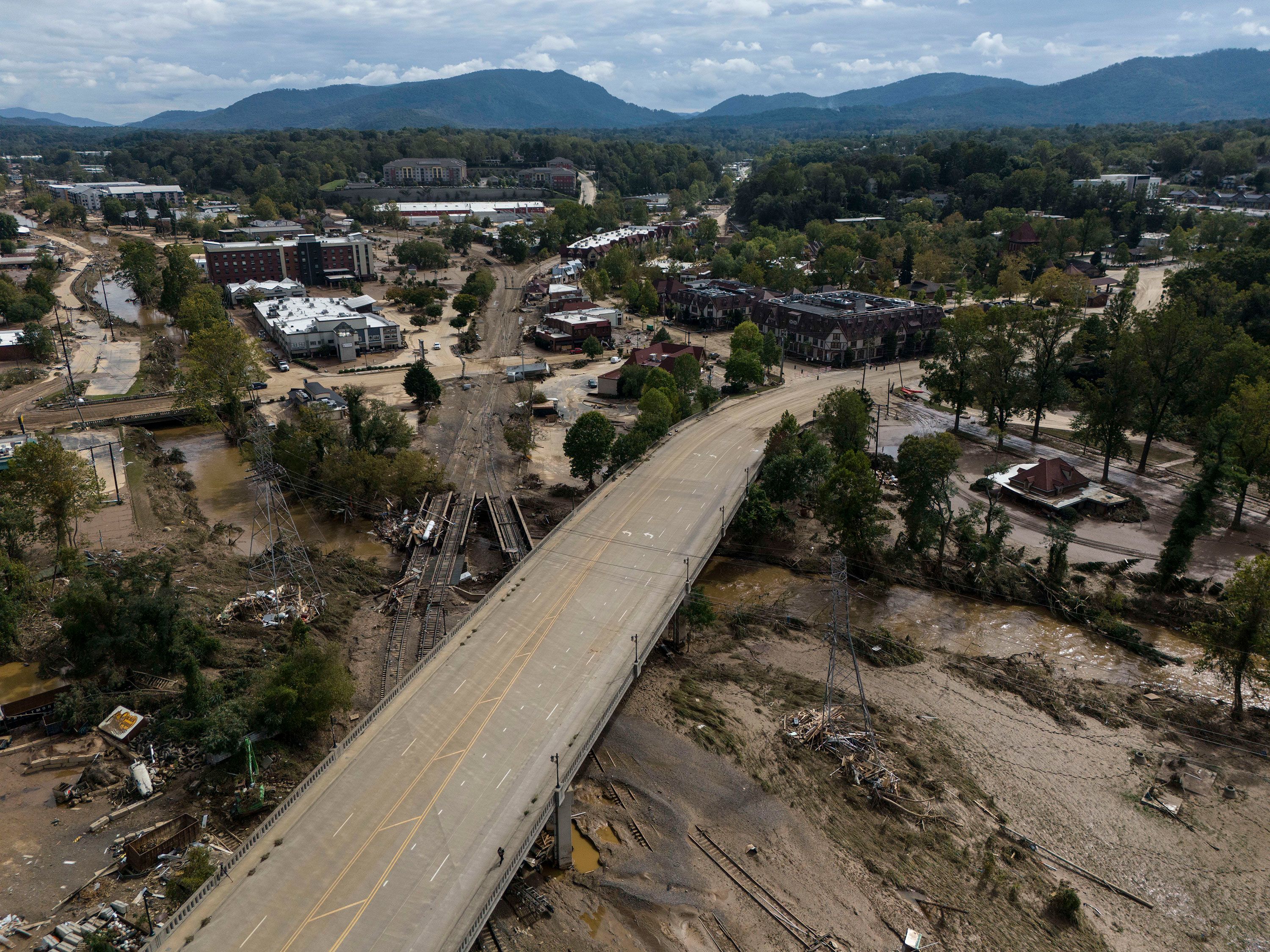
Hurricane Helene caused catastrophic flooding and mudslides across 25 counties in western North Carolina, washing out roads and bridges in a region that was already remote before the storm hit. Search and rescue dog teams worked alongside FEMA in conditions that experienced handlers described as among the worst they had seen in decades of fieldwork.
Jack Thorp, Director and K9 handler with the NC Troopers Association K9 Search & Recovery, spent ten days on site with his German Shepherd, Fiji. Annissia Justice, the organization's Assistant Director, worked alongside her Belgian Malinois, Dahlia. On any given day, Justice and Dahlia could spend eight hours searching in mud, four hours working a partially collapsed structure, and another four to five hours on the water in a boat, according to AKC's reporting. Mud in the affected areas ran up to eighteen inches deep, and teams decontaminated roughly every thirty minutes because the mud had to be treated as contaminated.
Why Genetics and Stability Decide Who Deploys
Justice was direct about what separates a dog that can do this work from one that cannot. A dog without stable genetics and strong drive would have been finished after the first briar patch or mud hole. That stability is not built during a deployment. It has to already be present in the dog before the dog is ever selected for the program.
Hannah Davis, founder of East Carolina Search and Recovery, described another non-negotiable trait for rubble work: intentional disobedience. Dogs searching collapsed structures climb into spaces while the handler stays on the ground, often out of visual range of what the dog is actually navigating. If a handler gives a cue the dog knows it cannot execute safely, the dog has to override it. That is a trained behavior, not instinct, and it only works because the dog has been deliberately conditioned to prioritize its own safety judgment over a handler command in that context.
Davis also noted something the public rarely hears. Ninety to ninety five percent of human remains detection handlers are volunteers, not paid professionals or law enforcement, and the field skews heavily female on the front lines. It takes roughly two years to train a remains detection dog to deployment standard before that dog ever sets foot on a disaster site.
The 2025 Texas Hill Country Floods
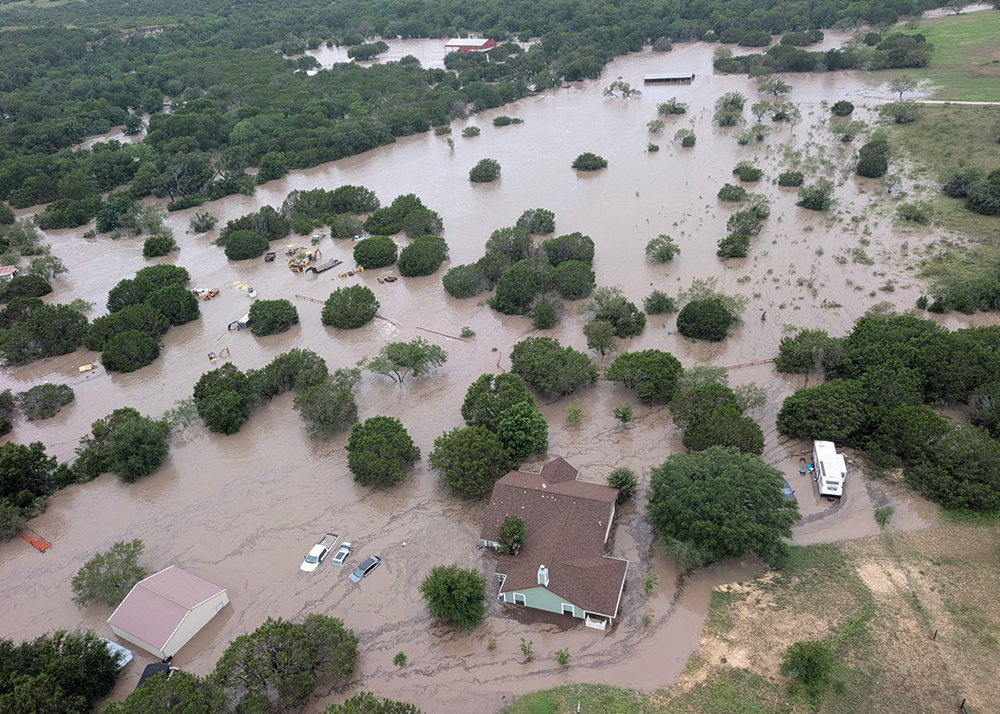
Flash flooding tore through Central Texas in July 2025. Wisconsin Task Force 1 deployed an initial team of five people and three canines on July 8, just days after the water hit, growing to twenty one personnel over a fourteen day mission.
K9 handlers Andy Kissh and Michelle Metzner worked their dogs, Merlin, Duke, and Reaper, in staggered shifts along the Guadalupe River. Metzner might start a section with Merlin or Duke in the morning, then swap with Kissh and Reaper roughly two to four hours later. Teams covered five to eight miles of riverbed and debris pile a day, working sections methodically rather than searching at random. The mission ran through the Emergency Management Assistance Compact, the national system that lets states request and send resources across state lines during a disaster.
Proofing Against the Wrong Scent
The dogs were trained through a partner nonprofit, Wisconsin K9 Search Specialists, to alert specifically on human remains and nothing else. During training, handlers deliberately plant distractor scents, things like dead animals, cat food, or hot dogs, to confirm the dog will not false alert on anything biologically similar but not human. That distinction, between a trained dog and a dog proofed against everything it might encounter in a real debris field, is the difference between a reliable alert and a wasted search cycle.
Kissh was candid about the emotional weight built into the role. A human remains detection dog gets no reward for clearing three hours of terrain and finding nothing, even though clearing ground is genuinely useful work. When the dog does alert, the team is relieved to reward it and grieved by what the alert means. That tension sits underneath this job for every handler running this kind of dog, on every deployment.
Where the Two Records Actually Overlap
It's worth being precise here, because not every pattern below shows up in both deployments. Some details are specific to one record and shouldn't be generalized to the other.
Shift rotation is documented in Texas, not in the Helene reporting. Kissh and Metzner's two to four hour swap schedule is explicit in the Wisconsin account. The Helene reporting describes teams rotating in and out over multiple days as deployments cycled, which is a different mechanism. Neither source contradicts the other, they just describe different layers of rotation.
Decontamination cycles are documented in Helene, not mentioned in the Texas reporting. The thirty minute decon protocol is specific to the Helene account, where contaminated mud made it necessary. The Wisconsin piece doesn't address decontamination at all. That's an absence in the reporting, not evidence the practice was skipped.
Selection and proofing before deployment shows up in both, in different forms. Helene's reporting addresses genetic stability and intentional disobedience. The Texas reporting addresses distractor scent proofing. Both are pointing at the same underlying idea: the dog's reliability under pressure was established in training, long before the callout came in.
Coordinated deployment, not self-deployment, shows up in both. Davis stresses in the Helene piece that teams must wait to be called up rather than self-deploying into the disaster zone. The Texas teams moved through EMAC, a formal interstate request system. Both records describe deployment as something that runs through an existing coordination structure, not an individual decision to drive toward the damage.
What This Means for Programs Beyond These Two Storms
This next part is our own read on the records, not a claim either source makes directly. Neither of these teams is a DogBase customer. What their public reporting shows, though, is a pattern that shows up across well-run SAR K9 programs generally: readiness is built from selection criteria, training documentation, and coordination structures that exist before the call comes in, not assembled during the response.
A program that cannot show, in writing, which dogs are certified, which dogs have logged distractor proofing, and which handler-dog pairs can sustain a multi-day deployment is operating on memory and trust rather than evidence, regardless of how capable the individual dogs are. The Helene and Texas records are not abstractions. They're what the documentation behind readiness looks like when it's tested for real.
Practical Takeaways for SAR K9 Teams
- Document selection criteria for working dogs explicitly: drive, terrain stability, and trainability for safety override behaviors like intentional disobedience, not just a general temperament impression.
- Build distractor proofing into every training cycle and log which scents were used, not just that proofing happened.
- If your team runs multi-day deployments, decide and document your rotation plan based on logged data about how long a given dog sustains performance, not improvisation in the field.
- Treat decontamination as a logged protocol wherever contamination risk exists, not an informal step.
- Know your region's mutual aid framework and your team's certification status against it before a disaster makes the question urgent.
References
- Patterdale, Sassafras. "Volunteer Search and Rescue Dog Teams Respond to Disaster After Hurricane Helene." American Kennel Club. https://www.akc.org/expert-advice/news/volunteer-search-and-rescue-dog-teams-hurricane-helene/
- "Wisconsin Task Force 1 recounts mission to assist Texas following devastating flood." Wisconsin Emergency Management, August 6, 2025. https://wem.wi.gov/task-force-1-recounts-mission-to-texas/