




.webp)
.webp)

.webp)


By Almog Koren. Founder of DogBase and an active SAR K9 handler who trains and deploys with his Belgian Malinois, Echo. His work spans documentation practices across search and rescue, sport, and detection disciplines.
Published July 2026
Key Takeaways
- Tracking dog training builds on an existing biological advantage. Dogs carry between 200 million and 1 billion olfactory receptors depending on breed, compared to roughly 5 million in humans, and their olfactory bulb is about 30 times larger relative to brain size, according to research published in the Journal of Neuroscience (2022).
- Tracking and trailing are two separate disciplines. Tracking dogs follow ground disturbance odor footstep by footstep with the nose close to the ground, while trailing dogs follow drifting human scent that can carry them several feet off the actual path a person walked.
- Under FCI tracking regulations, a handler follows the dog at roughly ten meters on a ten meter line, and the advanced IFH tracking tests require a handler laid track of at least 600 paces across five legs and four corners, including three scent articles.
- Rushing distance, age, or terrain difficulty before a dog's foundation is solid is one of the most common ways handlers suppress a tracking dog's natural drive instead of building it.
- Logging track conditions such as surface, age, wind, and number of turns lets a handler catch a decline in indication reliability early, instead of finding out during a failed certification run or a missed find in the field.
What Tracking Dog Training Actually Builds
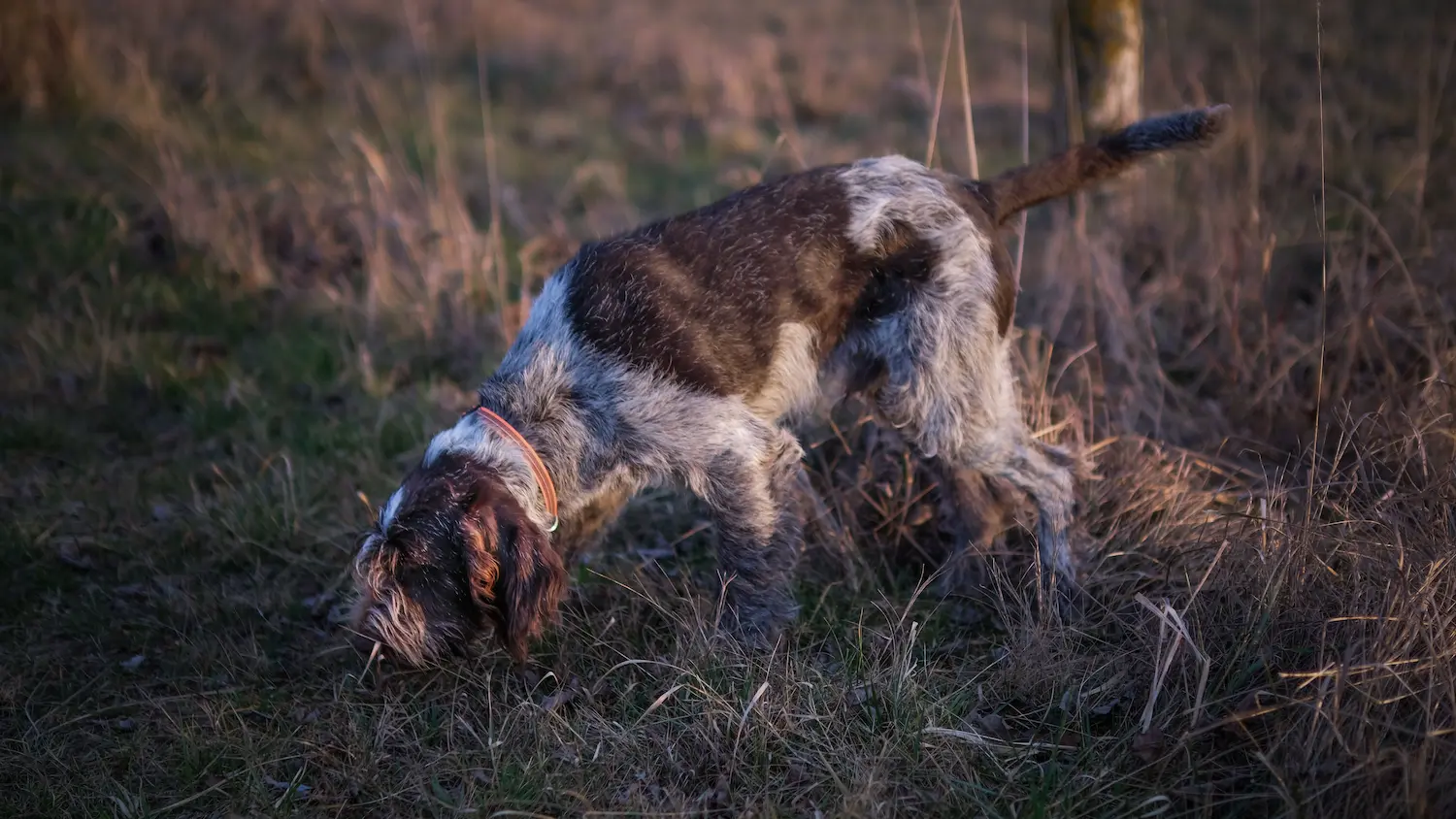
Tracking dog training is the process of teaching a dog to systematically follow a scent trail left on the ground, using ground disturbance odor and pooled human scent, and to indicate objects or a person at the end of it. It isn't a behavior invented in a training yard. It's a refinement of something dogs already do without any human input at all: reading a scent picture on the ground and following it to its source.
That distinction matters for how you train it. A tracking program that works with the dog's instinct, rather than trying to install a new one, moves faster and holds up better under pressure. Whether the end goal is a SAR dog trailing a missing hiker through mixed terrain or a sport dog working a five leg IGP track for score, the underlying mechanism is the same. Instinct comes first. Structure gets layered on top of it.
Tracking vs Trailing: Two Different Jobs Built on the Same Instinct
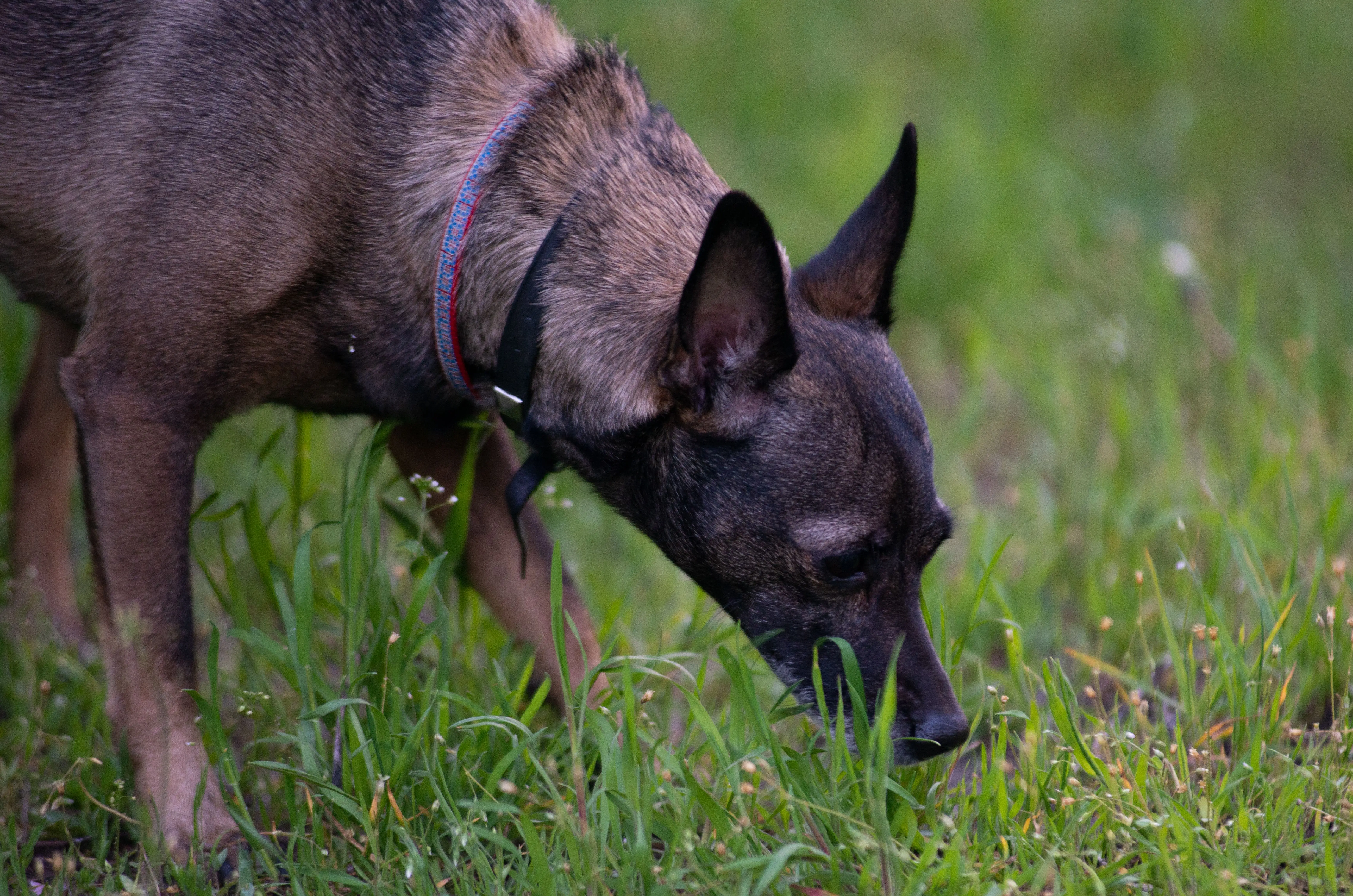
Tracking and trailing are not the same skill, even though people use the words interchangeably. A tracking dog works with its nose close to the ground, moving footstep to footstep and reading the odor released when a foot compresses soil, crushes vegetation, or disturbs ground cover. Search and rescue programs describe this as a true footstep tracker: a dog that stays on the literal path the person walked, working the ground disturbance rather than the person's scent alone.
A trailing dog works differently. It follows the scent cone that falls and drifts off a person's body as they move, which means it can range several feet off the exact path someone took, especially in wind or on surfaces where footstep odor doesn't hold. Trailing dogs are typically given a scent article before the search starts and are trained to discriminate that specific person's odor from everyone else's.
The practical differences show up fast once you compare the two side by side:
- Nose position: Tracking dogs stay nose down, close to the ground. Trailing dogs work more independently, sometimes lifting their heads to catch drifting scent.
- Working distance from the path: Tracking dogs stay tight to the actual route. Trailing dogs may swing wide, then correct back onto the line.
- Best conditions: Tracking favors soft, undisturbed ground where footstep odor holds. Trailing handles wind, aged scent, and harder surfaces better.
- Starting point: Tracking usually starts from a known last footprint. Trailing usually starts from a scent article at the last known location.
Neither approach is superior. They solve different problems, and many operational teams cross-train dogs in both so they can adapt to whatever terrain and scent conditions a real deployment presents.
The Instinct Behind Tracking: Why Dogs Are Built for This
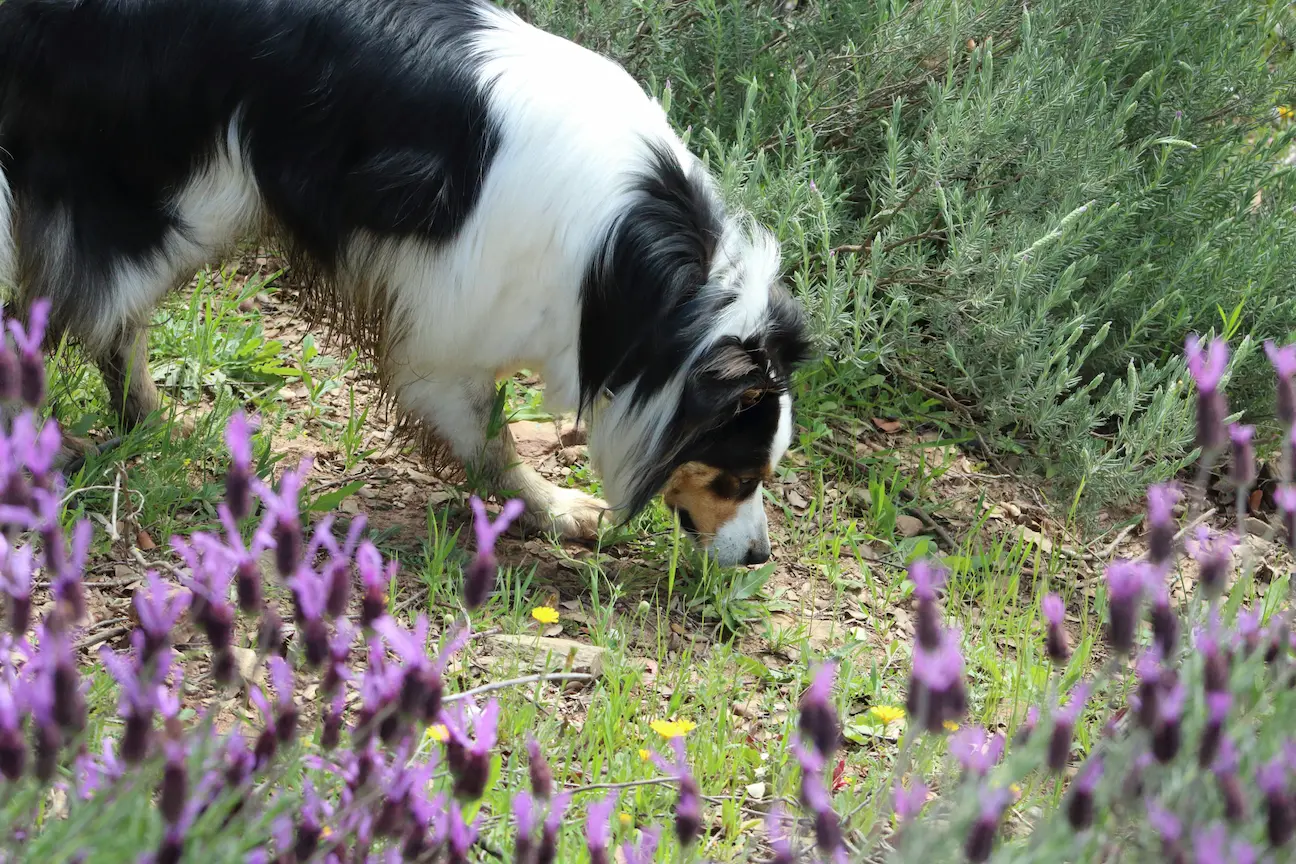
Dogs track well because their sense of smell is built for exactly this kind of work. Research published in the Journal of Neuroscience found that the canine olfactory epithelium contains between 200 million and 1 billion receptors depending on breed, compared to roughly 5 million in humans, and that a dog's olfactory bulb is about 30 times larger relative to overall brain structure than a human's. That same research points to scent based spatial navigation as one of the behaviors this anatomy supports, not just detection of a single odor in isolation.
What that means in practice is that a dog isn't learning a foreign skill when you start tracking training. You're shaping and extending a natural tendency to read and follow a scent trail, the same tendency that shows up untrained in a puppy following a sibling's path across a yard or working out where a dropped treat rolled. Training doesn't create the ability. It gives the dog a structure to apply it consistently, under distraction, and on command.
Building the Foundation: How to Start Tracking Training With a Green Dog
Every reliable tracking dog starts the same way: short, easy, and rewarding. The sequence looks like this.
- Start with short, fresh tracks in low distraction terrain. A quiet grass field with no wind problems lets the dog succeed early and builds drive before you introduce any real difficulty.
- Reward along the track itself. Food drops or toy placements on the path teach the dog that tracking produces reward, not pressure. Corrections have no place in this stage.
- Keep early tracks straight. A dog needs to trust its nose on a straight line before it can commit through a direction change. Turns come later.
- Train article indication separately before you ever put one on a real track. The dog should already know what a clean indication looks like, so tracking and indicating don't get taught as one confusing skill.
- Extend one variable at a time. Add age, distance, a single turn, or a terrain change, but never more than one at once. A dog that fails a session is almost always working two new problems at the same time.
This is the stage where most of a program's long term reliability gets decided. A dog rushed through this sequence learns to quit when a track gets hard. A dog built through it learns to work through difficulty because early difficulty never outran its confidence.
Progressing the Track: The Four Variables That Build a Reliable Tracker
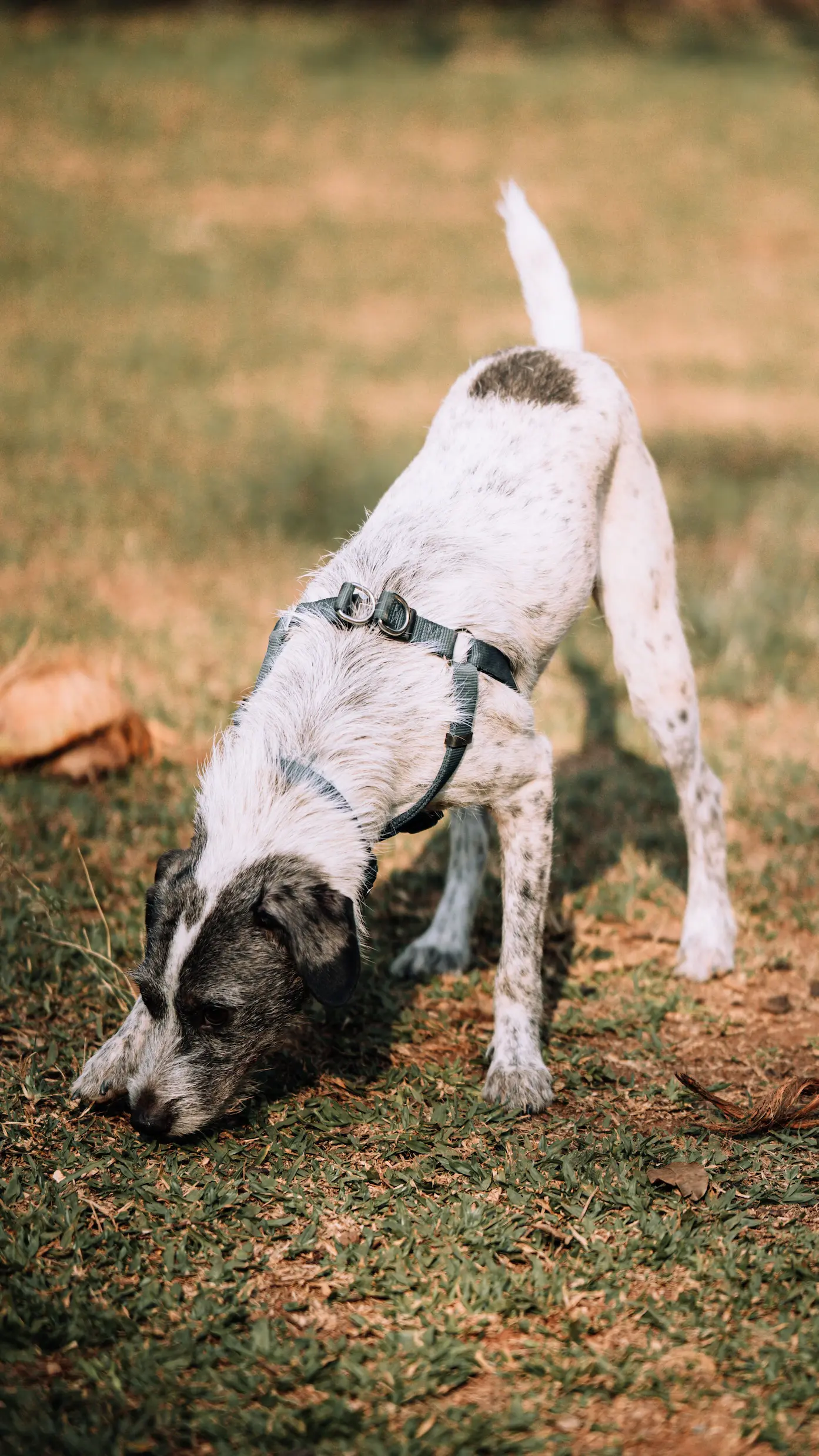
Once the foundation holds, a handler has exactly four levers to pull, and pulling them one at a time is what separates a program that scales from one that stalls.
Age. How much time has passed since the track was laid. Older tracks have weaker, more degraded scent, and this is usually the last variable to extend, not the first.
Distance. How long the overall track runs. Longer tracks demand more sustained focus and stamina, both physical and mental.
Terrain and surface. Grass, dirt, gravel, pavement, and mixed cover each hold and release scent differently. A dog trained only on grass will struggle the first time it hits a paved section, so surface variety needs to enter training deliberately, not by accident on a real deployment.
Distractions. Crossing tracks, wildlife scent, other people, and environmental noise all compete for the dog's attention. Introducing these gradually, rather than all at once in the field, is what keeps a dog committed to its actual job under real pressure.
Where Sport Tracking and Operational Trailing Diverge
Competition tracking and operational trailing test different things, even though both draw on the same core instinct. Sport tracking, as run under FCI regulations, is structured and scored. The handler follows the dog at roughly ten meters on a ten meter line, and the more demanding IFH tracking tests require a handler laid track of at least 600 paces, running across five legs and four corners, with one corner between 30 and 60 degrees and three scent articles placed along the route. The dog is expected to make the working decisions independently, and points are awarded for precision.
Operational trailing has none of that structure to lean on. A SAR dog might work a track that's hours or days old, crossed by other people's scent, running through a mix of urban pavement and wilderness terrain with no laid course to reference and no judge scoring footwork. The dog isn't chasing points. It's finding a real person, and the track it gets is whatever the world happened to leave behind.
That gap is exactly why cross-training matters for teams that can support it. The precision built through structured sport tracking transfers into cleaner indication behavior and better focus in the field, even though the operational environment will never look as clean as a competition track.
Common Mistakes That Suppress a Dog's Tracking Instinct
A handler doesn't need to do much wrong to stall a dog's progress. The mistakes that show up most often are small and easy to miss in the moment.
- Adding distance or age before drive is solid. This produces a dog that quits under difficulty instead of working through it.
- Correcting a dog for coming off track instead of rebuilding engagement. Corrections at this stage teach avoidance, not precision.
- Skipping a clean, separately trained article indication. A dog that's never practiced indicating in isolation will fumble it the first time one shows up mid track.
- Ignoring wind and weather when planning a session. A dog gets blamed for a handler's poor track placement more often than programs like to admit.
- Running the same pattern every session. A dog that learns to predict where the track goes is reading the handler's habits, not the scent.
Why Logging Every Track Session Builds Long Term Reliability
Handlers who log every track session, noting surface, age, wind, and number of turns, can see indication reliability start to slide over the course of several weeks, long before it costs a team a failed certification run or a missed find in the field. Without that record, a bad session looks like an isolated bad day. With it, a pattern becomes visible: maybe the dog struggles specifically on aged tracks over 90 minutes old, or loses precision on hard surfaces, or performs worse after back to back distraction training. None of that shows up from memory alone.
This is the part of tracking dog training that has nothing to do with scent theory and everything to do with process. DogBase's Training & Activity Logging feature is built for exactly this kind of session by session record, and Performance Analytics & Insights turns that logged data into visible trends across time, so a handler can catch a developing gap before a certification does it for them. For teams running mixed disciplines, the Custom Type Builder lets a program define its own tracking specific fields, whether that's track age, terrain type, or article count, instead of forcing the data into a generic training log that wasn't built for this discipline.
A dog's nose does most of the work in tracking. What separates a program that improves year over year from one that plateaus is usually not the dog. It's whether the handler can see the pattern in what the dog has already shown them.
FAQ
What's the difference between tracking and trailing in a dog?Tracking dogs follow ground disturbance odor footstep by footstep with the nose close to the ground. Trailing dogs follow drifting human scent that can carry them several feet off the exact path a person walked. Both draw on the same core scenting instinct, but tracking suits fresh, undisturbed terrain, while trailing handles wind, aged scent, and harder surfaces better.
How do I start tracking training with a new dog?Begin with short, fresh, straight tracks in low distraction terrain and reward the dog along the path so it associates tracking with success rather than pressure. Add turns, distance, and track age one variable at a time, and don't put an article on a real track until the dog already has a clean, separately trained indication behavior.
How long does it take to train a reliable tracking dog?Most dogs need several months of consistent, short sessions to build a reliable foundation, and certification ready tracking, whether for sport or SAR work, typically takes a year or more of progressive training. The timeline depends more on the dog's drive and the consistency of training than on breed alone.
Can any dog breed learn to track?Most dogs have the physical scenting ability to learn basic tracking, since the underlying instinct is built into canine olfaction broadly, not limited to a handful of breeds. That said, working and sporting breeds bred for stamina and drive tend to hold focus over longer or harder tracks more consistently than breeds selected for other traits.
How is IGP tracking different from search and rescue trailing?IGP tracking is a scored, structured discipline run on a handler laid track with a set number of legs, corners, and articles, judged on precision and independence. SAR trailing has none of that structure. The dog follows a real, often hours or days old scent trail across mixed terrain to locate an actual missing person, not a course laid out for scoring.
How often should a tracking dog train to keep the skill sharp?Short, frequent sessions beat occasional long ones. Most active tracking programs run at least one to two dedicated track sessions a week, with conditions logged each time, so a handler can tell whether a dip in performance is tied to a training gap or to something like weather, track age, or terrain.